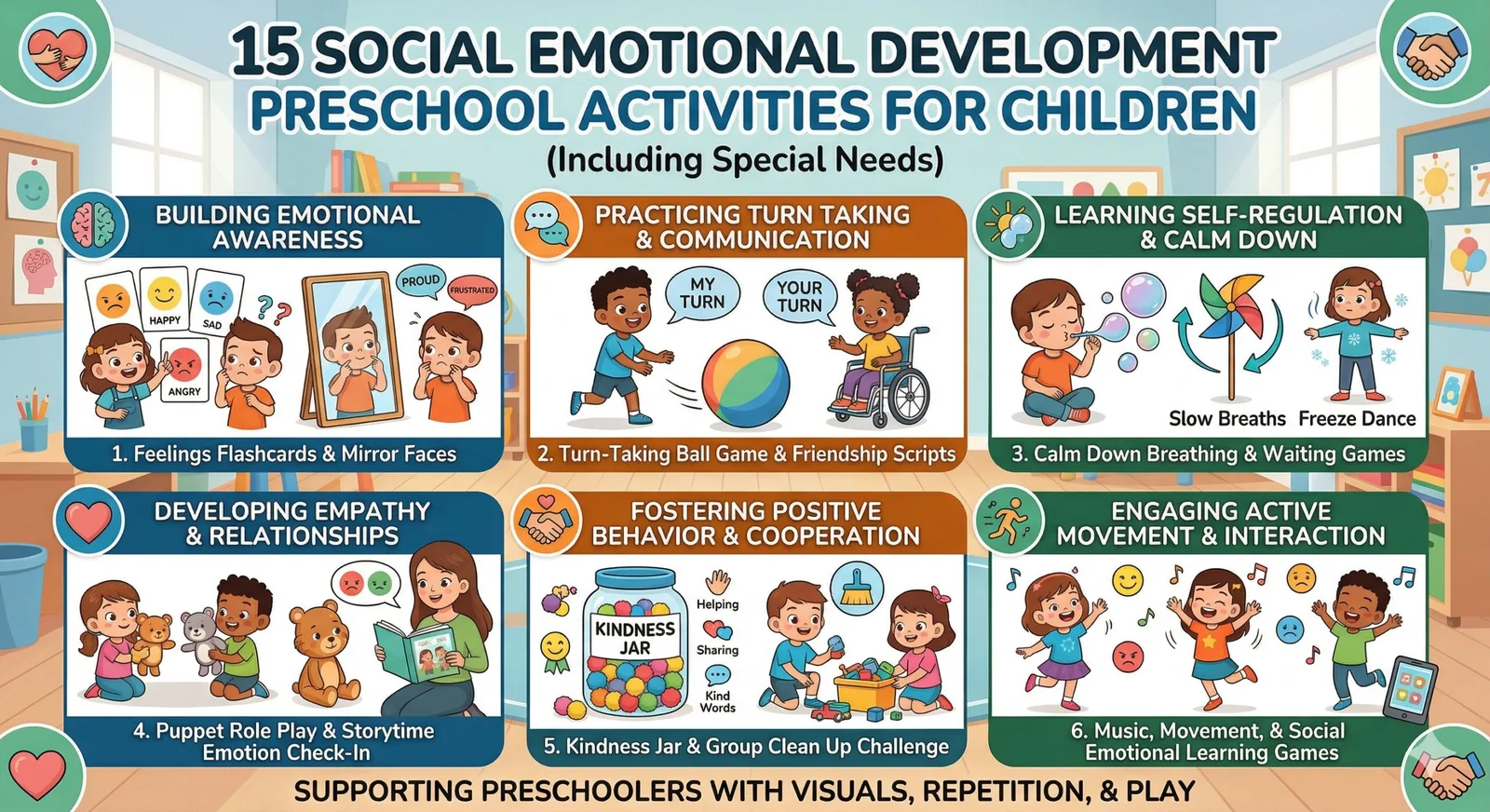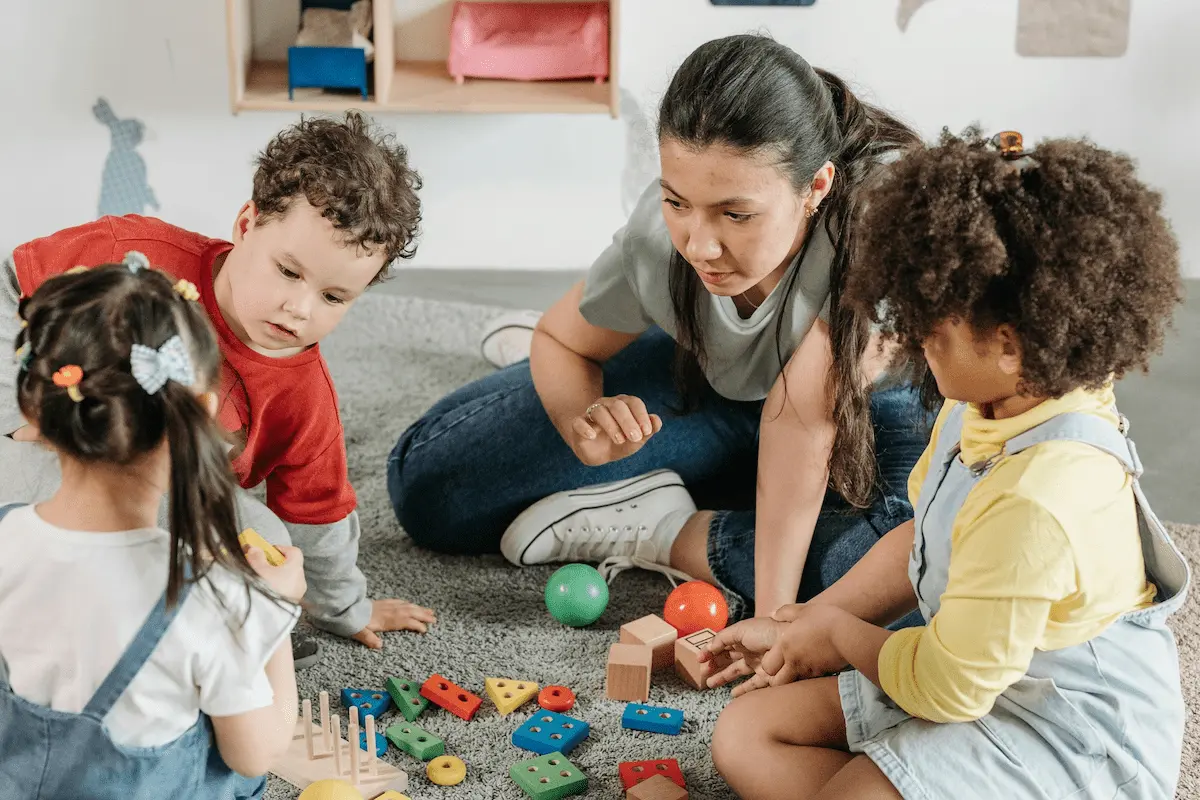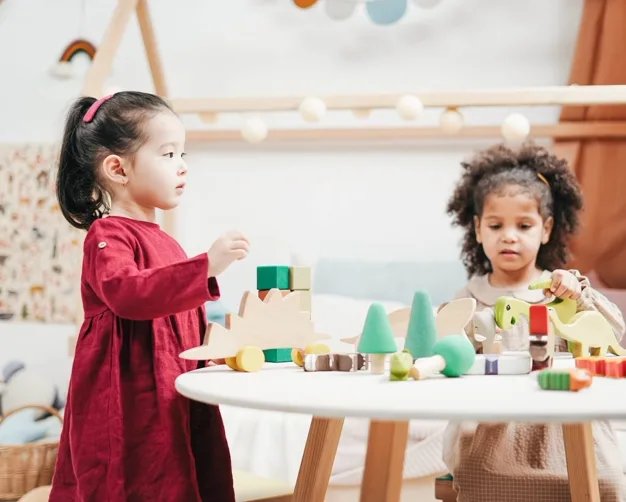
Put four-year-olds at a table together and something happens that does not happen when they work alone. They explain things to each other. They argue about whose turn it is. They copy a solution they just watched someone else find.
That is collaborative learning, and it is one of the few things in early years education where the practical case and the research case point the same way.
There is a catch, though, and it is the reason group work often disappoints. Sitting children near each other is not collaboration. The benefits below depend on specific conditions being in place, and when those conditions are missing, group work reliably produces less learning than the same children working individually.
Build Skills Through Play
AR games designed with therapists — for children with ADHD, ASD, DCD, and more. Just a laptop camera. No downloads.
Try Free for 14 DaysWhat Collaborative Learning Means at This Age
Collaborative learning is children working in pairs or small groups toward something they could not manage as easily alone. In early childhood that usually means building, sorting, solving, or making something together rather than discussing a topic, because the thinking at this age happens through the hands.
It is worth separating three things that get treated as the same:
- Parallel play is children working side by side on the same materials without coordinating. Normal and valuable for toddlers, but it is not collaboration.
- Group work is children placed together with a shared task and no structure. This is what most people picture, and it is the version that often fails.
- Cooperative learning is group work with deliberate structure, where the task genuinely requires more than one child and each child's contribution is visible.
The research advantage belongs to the third one.
The Benefits for Children
Communication develops under real pressure
A child who wants a specific block has to make another child understand that. This is language with a genuine purpose behind it, which is a stronger driver than any vocabulary exercise.
Perspective-taking becomes concrete
Young children are famously bad at recognizing that another person can want something different. Collaboration makes that abstraction physical: another child is holding the piece you want and has their own reason for it.
Quieter children get a way in
Speaking to one partner is a far lower bar than speaking to a room. Small groups are often the setting where a child who never volunteers an answer in circle time starts talking.
Explaining consolidates learning
The child doing the explaining usually gains more than the one being explained to, because putting something into words forces it into order. This is one of the most reliable findings in the collaborative learning literature.
Motivation and attention rise
Children stay with a task longer when someone else is invested in it. A tower two children are building is harder to abandon than a tower one child is building.
Difference stops being an obstacle
In a mixed group, children encounter peers who work differently, need different things, or communicate differently. Handling that in a structured setting at four is how inclusion becomes ordinary rather than exceptional.
Self-esteem grows from contribution
Being needed by the group is a specific kind of confidence, and it is available to children who are not the fastest or the most verbal, as long as the task is designed so that different contributions count.
The Five Conditions That Make It Work
David and Roger Johnson spent decades studying why some cooperative groups outperform individual work and others do worse. Their answer is that five elements have to be present. If you take only one thing from this page, take this list.
- Positive interdependence. The task must actually require the group. If one capable child can do the whole thing, they will, and the others will watch.
- Individual accountability. Each child's contribution has to be visible. Without this, effort quietly drains toward whoever is most willing.
- Promotive interaction. Children need to be positioned so they help each other directly, which in practice means facing each other with shared materials rather than sitting in a row.
- Explicit social skills. Taking turns, disagreeing without a fight, and asking for help are taught, not assumed. At three and four, they have to be taught.
- Group processing. A short conversation afterwards about what went well and what was hard. Even a two-minute version at this age changes what happens the next time.
Most disappointing group work is missing the first two. The task did not need a group, and nobody could see who did what.
The Other Collaboration: Staff, Families, and Specialists
Collaboration in early childhood education means a second thing as well, and it matters just as much: the adults around a child working from the same picture.
Early years staff, families, and any therapists involved each see a different slice. A speech therapist sees forty minutes a week in a quiet room. A parent sees mornings, mealtimes, and bedtime. A teacher sees the child in a group of twenty. None of those is the whole child, and a strategy that works in one setting often falls apart in another because the reasons it worked were never shared.
Practically, this looks like a shared vocabulary for what a child needs, agreement on which two or three goals matter most right now rather than a list of fifteen, and a way for parents to say what is actually happening at home without it feeling like a report card. When a child has a support plan, this is the difference between a document and something that changes a child's week.
It also matters for the child's own collaborative learning, because the adults are modeling it. Children notice whether the adults in a room coordinate or work around each other.
Setting It Up in a Classroom
Start with pairs rather than groups. Three-year-olds can manage a partner; a group of five is usually beyond them, and the child who gets squeezed out is almost always the one who most needed the practice.
Design the task so it cannot be done alone. One child holds while the other builds. Each child has half the pieces. One has the picture and the other has the materials. This single move does more than any amount of encouragement to cooperate.
Teach the social move you want before the activity, not during it. If the skill this week is asking for a turn, name it, show it, and let them practice it in a low-stakes moment first.
Rotate partners deliberately. Children left to choose will pick the same person every time, and the perspective-taking benefit comes from variety.
Then close with thirty seconds of reflection. What was tricky? What did your partner do that helped? That is group processing, and it is the element most often skipped.
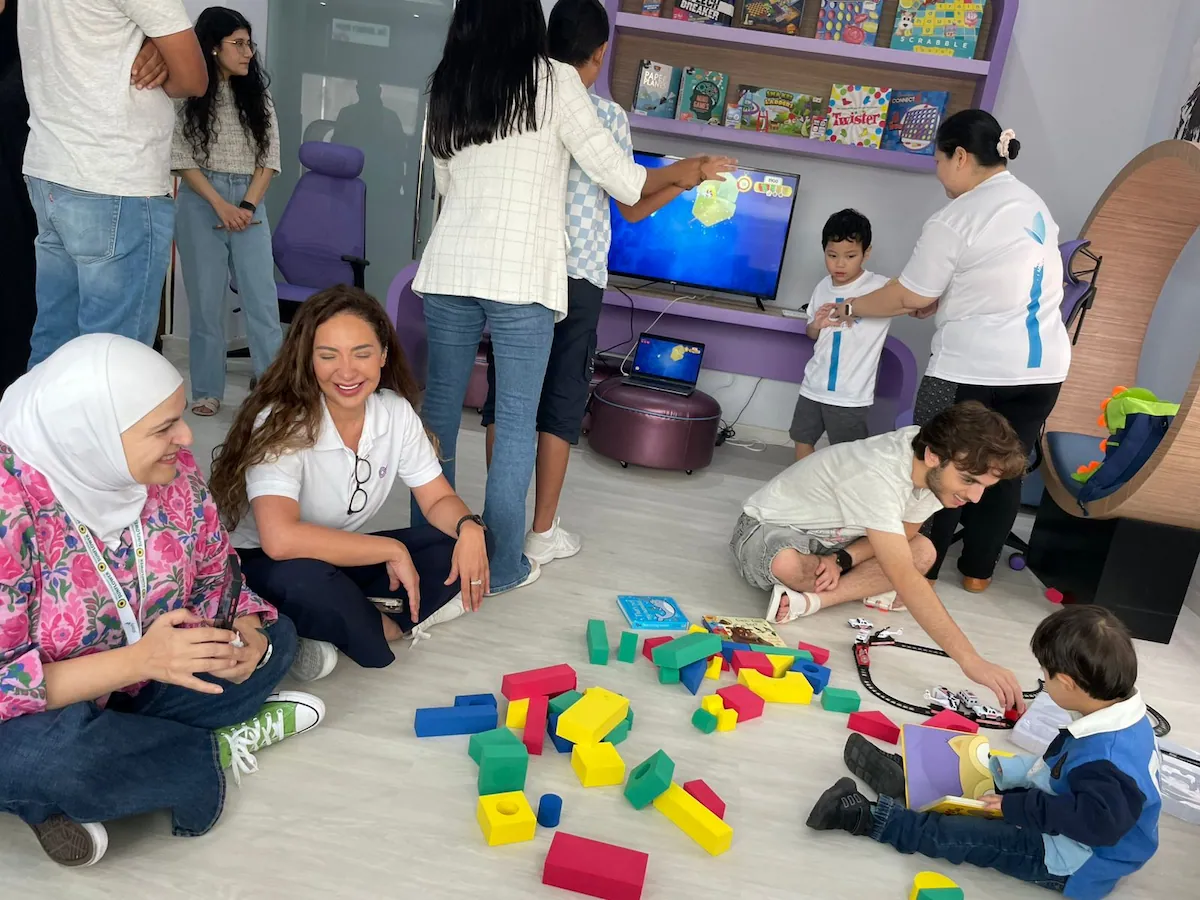
Motion-based games can carry this well in a classroom, because a game that reads the whole body gives children something physical to coordinate around and keeps the turn-taking visible to everyone watching.
Games for a Classroom Group Activity
Both read the whole body through the laptop camera, so turn-taking stays visible to everyone watching rather than hidden behind a screen.

Where It Goes Wrong
One child does everything. The usual cause is a task that never needed a group. Redesign the task rather than lecturing the child who took over.
Groups too large, too early. Pairs first. Move to threes when pairs are working, and be slow about going beyond that in the early years.
Social skills assumed. Turn-taking and disagreeing politely are content to be taught, not prerequisites for the activity.
Used for everything. Some learning is genuinely individual, and children also need solo practice. Collaboration is a tool for particular jobs, not a default setting.
See It In Action
Book a free demo and see how WonderTree works for your child, classroom, or therapy center.
Book a Free Demo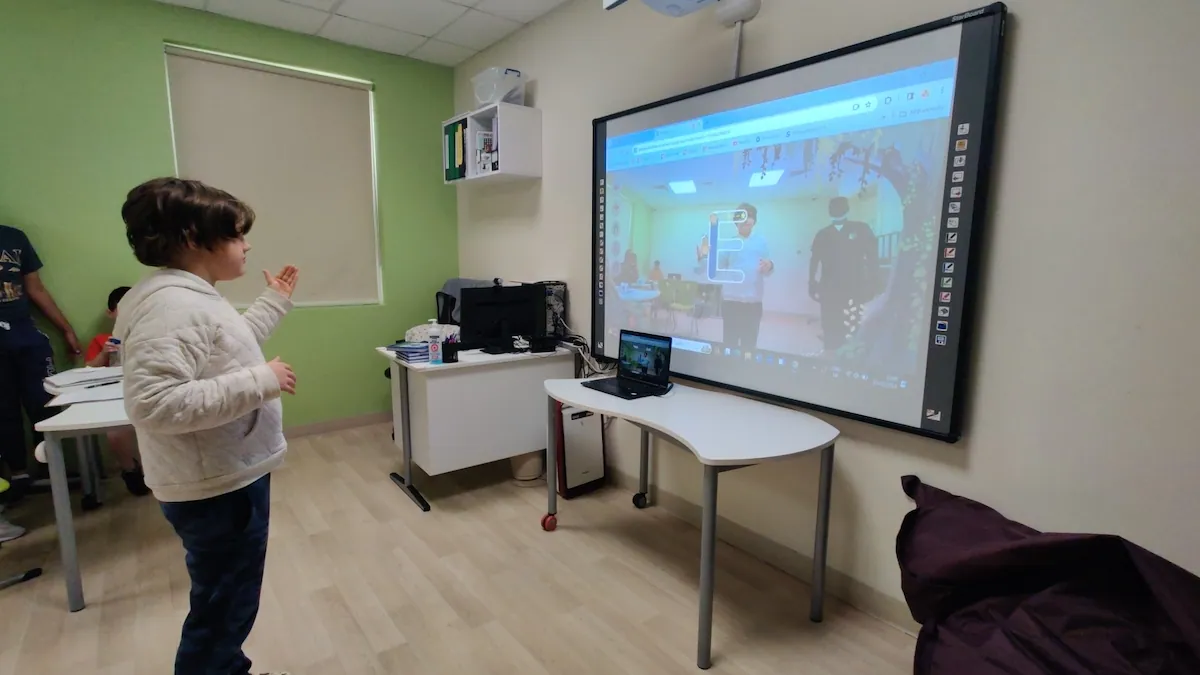
Frequently Asked Questions
What are the benefits of collaborative learning in early childhood?
Collaborative learning develops communication with a real purpose behind it, helps children recognize that others want different things, gives quieter children a lower-pressure way to speak, and consolidates learning through the act of explaining. It also raises attention and motivation, since children stay with a shared task longer than a solo one.
Why is collaboration important in early childhood education?
It matters in two senses. Children collaborating with each other builds communication, perspective-taking, and social skills at the age when those foundations are laid. Adults collaborating, meaning staff, families, and any therapists involved, matters because each of them only sees part of the child, and strategies that are not shared across settings tend not to hold.
What is the difference between group work and cooperative learning?
Group work is children placed together with a shared task and no structure. Cooperative learning adds structure: the task genuinely requires more than one child, each child's contribution is visible, they are positioned to help each other, the social skills are taught rather than assumed, and there is a short reflection afterwards. The research advantage belongs to the structured version.
How do you use collaborative learning in kindergarten?
Start with pairs rather than groups, and design the task so it cannot be done alone, for example by giving each child half the materials. Teach the specific social skill you want beforehand, rotate partners so children are not always with the same person, and finish with thirty seconds of reflection on what was hard and what their partner did that helped.
At what age can children start collaborative learning?
Toddlers usually play in parallel, meaning side by side without coordinating, which is developmentally normal rather than a failure to collaborate. Genuine cooperation in pairs typically becomes workable around three, and groups of three or more become manageable later, once pairs are going well.
Does collaborative learning work for children with additional needs?
It can, but the design matters more, not less. The task has to be built so that different kinds of contribution count, pairs work better than larger groups, and the social skills involved need teaching rather than assuming. Done well, mixed groups are how inclusion becomes ordinary rather than exceptional.
Why does group work sometimes make learning worse?
Almost always because the task did not actually require a group, so one capable child did everything, or because individual contributions were invisible, so effort drained toward whoever was most willing. Fixing the task design solves this far more reliably than encouraging children to cooperate.
Was this article helpful?
Written by

Last medically reviewed on September 9, 2026
How we reviewed this article:
- (2009). An Educational Psychology Success Story: Social Interdependence Theory and Cooperative Learning Educational Researcher, 38(5), 365-379. https://doi.org/10.3102/0013189X09339057
- (2008). Promoting Early Adolescents' Achievement and Peer Relationships: The Effects of Cooperative, Competitive, and Individualistic Goal Structures Psychological Bulletin, 134(2), 223-246. https://doi.org/10.1037/0033-2909.134.2.223
- (2022). Can guidance during play enhance children's learning and development in educational contexts? A systematic review and meta-analysis Child Development, 93(4), 1162-1180. https://doi.org/10.1111/cdev.13730
September 9, 2026
Expanded with the five conditions that separate cooperative learning from ordinary group work, and a section on collaboration between staff, families and therapists.
July 21, 2020